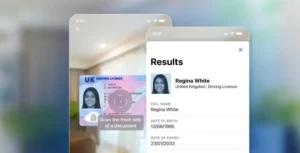
Experience the proven power of our computer vision solutions for yourself in a few simple steps.


AAMVA sets the standard that defines what North American driver licenses encode in their PDF417 barcode. How the format works and what it does not guarantee.
Learn moreAccount Takeover (ATO) occurs when unauthorized individuals gain control over user accounts using phishing, keyloggers, or malware. Protect against ATO attacks with strong authentication, unique passwords, and advanced security tools.
Learn moreAccount takeover (ATO) occurs when a fraudster gains unauthorized access to a user’s account. Learn how ATO happens, common warning signs, and how to prevent it.
Learn moreAccount takeover fraud is unauthorized use of an existing account. Learn how attackers get in and why onboarding checks structurally cannot catch it.
Learn moreAccount validation confirms a bank account exists and is owned by the named party. The four methods, the Nacha rule, and what it cannot tell you.
Learn moreAn address card evidences where someone lives, not who they are. Learn why proof of address is the weakest document class to verify.
Learn moreAddress risk scores a location as a fraud signal. Why repetition works, why every signal has a legitimate population, and where it should not gate.
Learn moreAVS compares the billing address a shopper enters against the card issuer's record. What the response codes mean and why AVS no longer stands alone.
Learn moreAdvance fee fraud asks for a payment to release a larger sum that does not exist. The variants, why the implausibility is deliberate, and where it is caught.
Learn moreAdverse media screening searches news and public records for negative coverage of a customer. Learn how it differs from sanctions screening and where it fails.
Learn moreEnsure age-restricted content is accessed legally by using ID checks, biometrics, or AI estimation tools to verify age and protect minors.
Learn moreAge-restricted purchases put the legal obligation on the seller. Methods available online, and how to prove age without collecting an identity.
Learn moreAI-powered refers to technologies, systems, or devices that utilize artificial intelligence to enhance their capabilities, performance, or functionality.
Learn moreAn Alien Registration Number is the USCIS identifier for non-citizens. Which documents carry it, what it proves, and why it is not a status check.
Learn moreAn alien's passport is issued by a state of residence to a non-national. What the XXA, XXB and XXC nationality codes mean and why parsers reject them.
Learn moreAn AML audit is independent testing of a BSA/AML program. What independence requires, what audits find, and why no rule sets a frequency.
Learn moreAML red flags are indicators that a transaction may involve illicit funds. Learn the main categories and why a flag is not evidence of wrongdoing.
Learn moreBoost your SEO with anomaly detection - Identify outliers, errors, fraud, and unusual events in data using statistical methods and machine learning algorithms. Essential for cybersecurity, finance, healthcare, and more!
Learn moreAnonymized data cannot be linked to a person by anyone. Learn how it differs from pseudonymized data and why biometric templates are neither.
Learn moreAML is the framework requiring institutions to detect and report money laundering. The program pillars, the 2026 US rule changes, and what AML cannot do.
Learn moreWho supervises AML in the US, UK, EU, Canada, Australia, Singapore and other major markets — and why there is no single global AML regulator.
Learn moreApplication fraud uses false or stolen information to obtain credit or an account. Compare third-party, synthetic and first-party variants.
Learn moreAUC measures how well a model ranks fraud above legitimate cases, independent of threshold. How to read it, why it misleads on rare events, and what to use.
Learn moreHow artificial intelligence is actually used in fraud prevention and identity verification, what it does that rules cannot, and where it is oversold.
Learn moreAn attack vector is the route to a target. The five that matter in identity verification, and why closing one displaces attackers rather than stopping them.
Learn moreAuthentication confirms someone matches an enrolled reference. How it differs from identification, verification and authorization, and why order matters.
Learn moreAutomate approval processes, streamline operations, and reduce manual intervention with auto-approval systems. Increase efficiency and reduce costs.
Learn moreStreamline decision-making with auto-decision systems powered by AI. Improve efficiency, accuracy, and reduce costs in finance, healthcare, and more. Stay transparent and accountable.
Learn moreA bad actor is anyone who deliberately abuses a system for gain. Learn how the term differs from a threat actor and why it is a label, not a signal.
Learn moreA bank drop is an account opened to receive fraud proceeds and abandoned. How it differs from a money mule, and why opening is the only control point.
Learn moreCompare KYC documentation needs for personal and business accounts. Understand verification timelines and compliance categories.
Learn moreLearn about the Bank Secrecy Act (BSA), a federal law in the US aimed at preventing money laundering and financial crimes. Discover its requirements and importance.
Learn moreBaaS lets a fintech operate under a bank's charter. Why the obligation stays with the bank, and what the consent orders established.
Learn moreBarcode scanning decodes a symbol reliably and authenticates nothing. Why cross-referencing against the printed fields is the real check.
Learn moreBehavioral fraud analysis flags deviation from an expected pattern. What it catches, the two failures it cannot fix, and why baselines need real identities.
Learn moreGain insights and make informed decisions with behavioral analytics. Track user behavior, optimize strategies, and enhance user experiences. Drive growth with data-driven decisions.
Learn moreBeneficial ownership identifies the real people behind a legal entity. Learn the 25% threshold and what changed for U.S. reporting in 2026.
Learn moreBiometric refers to the measurement and analysis of unique physical or behavioral characteristics, such as fingerprints or voice patterns, for identification or authentication purposes.
Learn moreA biometric passport stores a signed copy of the identity page on a contactless chip. Learn how passive and active authentication differ and why it matters.
Learn moreUnderstand the different types of biometric verification, how they work, and why this authentication process is more secure than traditional passwords.
Learn moreThe Border Crossing Card is a U.S. travel document for Mexican citizens entering the U.S. for specific purposes like tourism or business.
Learn moreA bot is software that acts automatically. Learn which bots matter in fraud, how they evade detection, and why identity beats behavioral signals.
Learn moreBEC impersonates a trusted party to trigger a payment. Why vendor invoice fraud costs most, and why email authentication reaches so little of it.
Learn moreA bust-out drains a patiently built credit relationship in one window. Learn the build phase and why the losses are booked as credit default.
Learn moreWhat the CCPA and CPRA require, who they apply to, how sensitive personal information is treated, and why verifying a consumer request is itself a risk.
Learn moreCNP fraud uses stolen card data where the card is never presented. Learn why EMV displaced it online and why false declines often cost more.
Learn moreCarding is the trade in stolen card data. Why card testing is what merchants actually experience, and where identity failures enter.
Learn moreCEO fraud impersonates a senior executive to trigger an urgent payment. How it works, why deepfakes broke the callback control, and what still holds.
Learn moreA Certificate of Citizenship (Form N-560) proves citizenship derived through a parent, not naturalization. See how it differs from Form N-550.
Learn moreChallenge-Response Authentication verifies identity by exchanging challenges and responses, enhancing security against replay attacks.
Learn moreA changeable laser image hides two engravings under a lenticular lens, swapping as the card tilts side to side. Learn how to verify a CLI.
Learn moreA chargeback forcibly reverses a card payment. How representment works, why ratios matter more than costs, and why the data arrives too late.
Learn moreCheck fraud is rising as check use falls. How check washing and mail theft work, why checks are structurally weak, and where the losses are caught.
Learn moreCOPPA governs collection of personal information from children under 13. Verifiable parental consent, the 2025 amendments, and the age-assurance problem.
Learn moreChip Authentication proves an ePassport chip holds a private key that never left the hardware. How it differs from passive and active authentication.
Learn moreClean fraud is card fraud that passes every automated check. Learn why it evades CVV and AVS, how it differs from friendly fraud, and what stops it.
Learn moreCNP fraud: Unauthorized transactions made using card details without physical presence. Businesses employ security measures to combat and protect against monetary losses.
Learn moreCompliance means meeting regulatory obligations and evidencing it. What it covers, the three lines model, and why evidence is the usual failure.
Learn moreA compliance officer is accountable for an organization's regulatory obligations and often personally liable. Learn what the role owns day to day.
Learn moreComputer vision extracts structured meaning from images. The core tasks, why identity documents are an unusually hard case, and where it fails.
Learn moreA consular ID is issued by a consulate to its nationals abroad. What the matrícula consular proves, banking acceptance, and why parsers struggle.
Learn moreThe CFPB regulates consumer financial products. What it does, what changed in 2025 and 2026, and how it relates to identity verification.
Learn moreA contactless chip communicates over a short-range radio field instead of physical contacts. The standards, the range limits, and where they appear.
Learn moreProactively analyze real-time data to detect risks, vulnerabilities, and breaches. Improve security, comply with regulations, and stay ahead of threats.
Learn moreConversion rate measures who finished onboarding. Why it hides two different losses, and why false declines are the costliest number nobody measures.
Learn moreCredential stuffing replays breached username and password pairs at scale. Why it succeeds, why rate limits are not enough, and what actually stops it.
Learn moreCredit card fraud splits into existing account misuse and new account fraud. Why the two need different defenses and only one is a transaction problem.
Learn moreCredit piggybacking adds someone as an authorized user so they inherit an account's history. Learn how synthetic identities use purchased tradelines.
Learn moreCross-channel fraud spreads its stages across channels that defend themselves separately. Why the call center absorbs it, and what actually stops it.
Learn moreCustomer Churn refers to the rate at which customers cease to do business with a company or unsubscribe from its services.
Learn moreCustomer due diligence is the baseline AML check every customer receives. Learn its four components and why monitoring inherits the identity check's quality.
Learn moreA Customer Identification Program verifies customer identity at account opening under USA PATRIOT Act Section 326. Required data, methods and limits.
Learn moreCIAM registers, authenticates and manages consumer accounts. Why identity proofing is the step before it, and where recovery becomes the weak point.
Learn moreCustomer Onboarding is the process of guiding and familiarizing new customers with a product or service to ensure a smooth transition and positive experience.
Learn moreCustomer risk profiling assigns each customer a rating that sets their due diligence level. Learn the factors used and why unverified data breaks it.
Learn moreThe dark web is reachable only through anonymizing networks. What identity data is sold there, what it costs, and what that means for verification design.
Learn moreA data breach exposes information without authorization. Learn why breached identity data never expires and which controls it permanently broke.
Learn moreData Capture Automation uses smart tools to extract and process data from documents, cutting down manual work and boosting efficiency.
Learn moreData Entry Automation: The process of utilizing software or systems to automatically input, validate, and manipulate data with minimal human intervention.
Learn moreData extraction turns a document image into structured fields. How it works on identity documents, and why extraction is not verification.
Learn moreHow the DPA 2018 works with UK GDPR, what the Data (Use and Access) Act 2025 changed for fraud prevention, and what it means for identity verification.
Learn moreDebit card fraud takes real money from a real account. How it differs from credit card fraud in liability, timing and consequence — and what stops it.
Learn moreA deepfake is synthetic media using AI to fabricate convincing video, images or audio of a real person. Learn how deepfakes defeat remote identity checks.
Learn moreDDA fraud targets everyday checking accounts. The four categories, the funds availability gap, and why three of the four are decided at opening.
Learn moreDevice fingerprinting identifies a device by its attribute combination. Learn how canvas fingerprinting works and why the technique is weakening.
Learn moreDevice risk scores how likely a device is to be involved in fraud. Learn which signals matter and why it should route rather than decline.
Learn moreA digital certificate binds an identity to a public key and is signed by a trusted authority. How the chain works, and how passports use it.
Learn moreDigital Footprint: The trail of information left by an individual's online activity, including social media posts, browsing history, and online interactions.
Learn moreDigital Forgery: Falsification or alteration of digital content, such as photos or documents, with the intent to deceive or mislead.
Learn moreDigital Identity refers to the online representation of an individual or entity's personal information, activities, and interactions on the internet.
Learn moreDigital Manipulation: The alteration or modification of digital images using software tools to enhance, correct, or create visual content.
Learn moreDigital onboarding takes a customer from application to active account with no in-person step. Learn where flows fail and why capture matters most.
Learn moreA Digital Passport is an electronic document that verifies a user's identity online, enabling secure access to digital services.
Learn moreDigital tampering alters the image of a genuine document to misrepresent it. Detection signals, how it differs from injection attacks, and what it defeats.
Learn moreDigital Trust is the confidence in the reliability, integrity, and security of digital technologies and online interactions.
Learn moreA digital watermark is a signal embedded in media data, invisible to people and recoverable by a detector. Learn what it proves and what it cannot.
Learn moreThe DNI, or Documento Nacional de Identidad, is the compulsory national identity card issued to citizens in Spain. See what it contains and how it is checked.
Learn moreDocument capture turns a physical ID into images a system can analyze, and it is where most remote flows fail. Learn what makes capture succeed.
Learn moreDocument Type Recognition is the process of automatically identifying and classifying different types of documents based on their content and layout.
Learn moreDocument verification is the process of confirming the authenticity and validity of a document, typically through comparisons with trusted sources or by using advanced technologies.
Learn moreA driver card identifies a professional driver to a digital tachograph. How it differs from a driving license, and why misuse is an attribution problem.
Learn moreThe barcode on the back of a US driver license is a PDF417 symbol holding AAMVA-formatted data. What it contains, and why scanning it is not verification.
Learn moreThe most presented U.S. identity document is not one document but several hundred versions. What the barcode, the star and the mDL each change.
Learn moreA drop address receives goods bought with stolen details. How drops are obtained, why repetition is the strongest signal, and what reshipping fraud is.
Learn moreDrop-off Rates: The percentage of users who leave a website or app after visiting only one page or without completing a desired action.
Learn moreThe Egmont Group connects 170+ financial intelligence units for secure information exchange. What it does, what it cannot do, and why it exists.
Learn moreEmail risk scoring assesses an address before a transaction. The signals that work, why age matters most, and why it cannot carry a decision alone.
Learn moreAn Employment Pass is Singapore's work permit for foreign professionals. What it shows, why it is a right-to-work document, and how verification actually works.
Learn moreEmulators let one system imitate another, enabling apps or OS from other platforms to run smoothly. Learn how they’re used in development.
Learn moreEMV is the global standard for chip payment cards. How the per-transaction cryptogram works, why it killed counterfeit fraud, and where fraud went instead.
Learn moreEnhanced due diligence applies deeper scrutiny to higher-risk customers. Learn what triggers it and how source of funds differs from source of wealth.
Learn moreEntity resolution works out which records refer to the same person or business. Learn how deterministic, probabilistic and graph matching differ.
Learn moreeIDAS governs EU electronic identity and trust services. What eIDAS 2.0 and the EU Digital Identity Wallet require, and by when.
Learn moreWhat the EBA does, how its technical standards become binding law, and what changed when AMLA took over its anti-money laundering mandate in 2026.
Learn moreESMA is a European regulatory body overseeing securities and markets, ensuring investor protection, stability, and transparency in the EU financial system.
Learn moreEAC restricts fingerprint and iris data on ePassport chips to authorized terminals. Its two components, who can use it, and what it does not cover.
Learn moreThe eKTP is Indonesia's electronic national identity card, launched in 2011 and serving over 172 million citizens. Learn what it stores and how it is verified.
Learn moreeKYC is the electronic process of verifying a customer's identity remotely using biometrics and digital documents. Learn how it differs from in-person KYC.
Learn moreFacial Matching: The process of comparing and analyzing facial features to determine whether two or more facial images belong to the same person.
Learn moreFacial recognition covers one-to-one verification and one-to-many identification. Why the distinction matters for accuracy, consent and regulation.
Learn moreFake check scams exploit the gap between funds availability and check clearing. How the timing works, the common setups, and why victims are held liable.
Learn moreFalse Negative: A result that incorrectly indicates the absence of a condition or attribute, despite it actually being present.
Learn moreA false positive flags a legitimate case as suspicious. What it means in fraud and screening, who really pays for it, and how it pairs with false negatives.
Learn moreThe false positive rate measures legitimate cases wrongly flagged. How it is calculated, why it dominates fraud operations, and the trade-off it cannot escape.
Learn moreWhat the FTC does on consumer fraud, identity theft and data security, the rules businesses must follow, and what its reported loss data does not capture.
Learn moreThe Financial Action Task Force (FATF) is an intergovernmental organization that sets global standards to combat money laundering and terrorist financing.
Learn moreThe FCA is the UK conduct regulator. How it differs from the PRA, its AML supervision role, and why the Consumer Duty reaches verification.
Learn moreFinancial crime covers laundering, fraud, bribery, sanctions and terrorist financing. How the categories differ, and the input they all share.
Learn moreFinCEN is the Treasury bureau that administers the Bank Secrecy Act and collects SAR and CTR filings. Learn what changed for beneficial ownership in 2026.
Learn moreHow fingerprint scanning works, the sensor types and their spoof resistance, and why fingerprints authenticate a return visit rather than identify a stranger.
Learn moreFirst Payment Default (FPD) refers to the failure of a borrower to make the initial payment on a loan or credit agreement.
Learn moreFirst-Party Fraud: Occurs when individuals deceive a business using their own identity to obtain goods, services, or money through fraudulent means.
Learn moreFraud Alert: A warning or notification that is issued to protect individuals or organizations from potential fraudulent activities or identity theft.
Learn moreFraud Analytics is the practice of using data analysis techniques and algorithms to detect and prevent fraudulent activities within a system or organization.
Learn moreFraud detection scores transactions in milliseconds using rules and machine learning. See which signals matter and what detection cannot catch.
Learn moreA fraud investigation reconstructs what happened after fraud is suspected. Learn the sequence, what evidence matters, and why most losses are never recovered.
Learn moreA Fraud Management System is a software solution designed to detect, prevent, and mitigate fraudulent activities within an organization's operations.
Learn moreFraud Prevention refers to measures and techniques implemented to detect, deter, and mitigate fraudulent activities, protecting individuals and organizations from financial losses and reputational damage.
Learn moreA fraud ring runs one method repeatedly at scale. Learn why per-application scoring cannot see it and which links are expensive to break.
Learn moreA fraud score ranks the risk of a transaction or application. What goes into one, why the threshold matters more than the model, and what a score cannot say.
Learn moreThe Fraud Triangle (Pressure, Opportunity, Rationalization) is a concept that explains the factors that typically lead individuals to commit fraudulent acts.
Learn moreA fraudulent transaction is a payment made without the account holder's authority. Compare third-party, authorized push payment and first-party fraud.
Learn moreFriendly Fraud: A deceptive practice where a customer disputes a legitimate transaction, resulting in chargebacks, often due to forgetfulness or intentional abuse.
Learn moreFullz is a complete package of stolen personal data sold for identity fraud. Learn what it contains, what it costs, and the one check it cannot defeat.
Learn moreFuzzy Matching: A technique used to find approximate matches between similar but not identical strings of text or data.
Learn moreGDPR governs personal data processing for people in the EU. Lawful bases, why biometric data needs an Article 9 condition, and what it means for IDV.
Learn moreA ghost employee is a payroll record with no real person behind it. The three forms, the detection signals, and how identity checks at hire close it.
Learn moreA ghost image is the faint secondary portrait on an ID document. Why it exists, how it defeats photo substitution, and what it cannot stop.
Learn moreA Global Entry card proves trusted traveler enrollment, not identity, and is not needed at airports. See where it works and what it cannot do.
Learn moreA global watchlist is a commercial compilation, not an official list. Why sanctions, PEP and adverse media hits mean entirely different things.
Learn moreA guilloche is the interwoven geometric line pattern on banknotes and IDs. Why mathematically generated curves resist copying and scanning.
Learn moreHealthcare fraud is deception to obtain payment from a health program. Learn which types identity verification stops and which need claims auditing.
Learn moreHeuristic Analysis: Evaluating the usability of a product or system by identifying and uncovering potential design flaws and user experience issues.
Learn moreA hologram on an ID is a diffractive structure whose image shifts with viewing angle. Learn how DOVIDs work and what a phone camera can actually see.
Learn moreICAO Doc 9303 is the specification behind every machine readable passport. What it standardizes, what it deliberately leaves to issuing states, and why.
Learn moreIAM controls who can reach which systems. Why it inherits identity rather than establishing it, and where the help desk becomes the weak point.
Learn moreIdentity as a Service (IDaaS) is a cloud-based solution that enables businesses to manage user identities and access privileges securely and efficiently.
Learn moreIdentity document verification confirms an ID is authentic and belongs to its bearer. Learn why document and biometric checks answer different questions.
Learn moreIdentity fraud is the use of identity data to deceive. How first-party, third-party and synthetic fraud differ, and why only one of them gets reported.
Learn moreThe category covers five distinct capabilities sold as one. What differentiates products, and the question to ask a vendor first.
Learn moreFour distinct identity fraud problems in banking, where each must be caught, and why synthetic identity losses never appear in fraud reporting.
Learn moreThe Identity Graph is a database that associates and links individuals' data across different devices and platforms, creating a unified profile.
Learn moreIdentity proofing establishes who someone is at first contact. The three stages, NIST assurance levels, and why everything downstream inherits it.
Learn moreIdentity theft and identity fraud are separate events. Why the institution that decides is never the one that leaked, and what that means.
Learn moreIdentity Verification: The process of confirming an individual's identity, often through the use of personal information, documents, or biometric data.
Learn moreAn Identity Verification Service Provider (IVSP) is a company that offers solutions for confirming the authenticity and accuracy of individuals' identities.
Learn moreAn image capture application acquires images fit for a purpose. Learn why verification capture deliberately produces worse-looking photographs.
Learn moreImage pre-processing enhances raw images for better quality and suitability in further analysis.
Learn moreImage processing is the manipulation and analysis of digital images to enhance or extract useful information, using algorithms and computer systems.
Learn moreIQA is the evaluation of the overall visual fidelity and perceived quality of an image, typically based on metrics and algorithms.
Learn moreAn image watermark can be a visible overlay or an invisible embedded signal. Learn how they differ, how AI removes them, and what removal leaves behind.
Learn moreAn in-browser SDK runs verification inside a web page with no install. Learn what WebAssembly made possible and what a browser still cannot do.
Learn moreIndia's IT Act 2000 governs electronic records and data security. What the DPDP Act and its 2025 Rules changed, and what has not been repealed yet.
Learn moreInsider Trading: Illegal practice of trading stocks or securities based on non-public information obtained by individuals within a company.
Learn moreInsurance fraud spans soft padding to organized staged loss rings. The types, why claims-stage detection arrives late, and what identity evidence changes.
Learn moreIntaglio printing presses ink into the paper under extreme pressure, leaving raised, tactile lines that digital printing cannot reproduce.
Learn moreThe IMF's Financial Integrity Group treats AML as a stability issue. How it differs from the World Bank and FATF, and why de-risking matters.
Learn moreINTERPOL connects national police forces and holds 138 million lost and stolen travel document records. Why a stolen passport passes every document check.
Learn moreInvoice Fraud is a deceptive practice where scammers create fake invoices or manipulate existing ones to trick individuals or businesses into making unauthorized payments.
Learn moreISO Certification is a globally recognized accreditation that certifies an organization's compliance with international standards for quality management systems.
Learn moreISO/IEC 14443 defines contactless proximity cards at 13.56 MHz. Its four parts, the Type A and Type B split, and why it underpins ePassports.
Learn moreISO/IEC 7816 governs contact smart cards — physical contacts, transmission protocols, and the APDU command structure used across payment and identity.
Learn moreKINEGRAM is a proprietary DOVID made by OVD Kinegram AG and supplied only to governments. Understand how it differs from a generic hologram.
Learn moreKYC is the obligation to establish who your customers are and keep it current. Learn how it differs from CDD and why evidence beats accuracy.
Learn moreKBA verifies identity with questions only the real person should answer. Learn why breach data inverted the control and what replaced it.
Learn moreLaser perforation burns microscopic tapered holes through a document to form an image seen against light. Learn why the taper defeats a reprint.
Learn moreA latent image appears only when a document is tilted. How intaglio line structure creates it, and why a flat copy can never show it.
Learn moreLiveness detection confirms a biometric sample came from a real person present at capture. Compare active and passive methods and injection attacks.
Learn moreLoan Fraud: Deceptive practices involving misrepresentation or falsification of information to obtain a loan, often resulting in financial losses for lenders.
Learn moreLottery and prize scams demand a fee before releasing a prize that does not exist. How the escalation works, and why the identity gap is at collection.
Learn moreHow machine learning is applied to fraud and identity verification, what it does better than rules, and the label problems that quietly limit it.
Learn moreAn MRTD is a travel document that conforms to ICAO Doc 9303. The TD1, TD2, and TD3 formats explained, plus what an eMRTD adds.
Learn moreThe MRZ encodes a document holder's key details in ICAO Doc 9303 format. Learn how check digits work and why a valid MRZ is not a valid document.
Learn moreA magnetic stripe stores static data in up to three tracks. The ISO/IEC 7811 track layout, HiCo vs LoCo, and why static data made skimming inevitable.
Learn moreMail Fraud: A criminal offense that involves using the postal system to deceive or defraud individuals or businesses.
Learn moreManual review is the human decision step in verification. Learn what a healthy review rate looks like and why a queue filters out good customers fastest.
Learn moreMarketplace fraud hits two-sided platforms from both sides. Learn why seller verification matters more than buyer screening and how triangulation works.
Learn moreMICR reads the magnetic characters at the bottom of a check. The E-13B and CMC-7 fonts, why magnetic beats optical here, and what it cannot detect.
Learn moreMicroprinting is text too small to read unaided, printed on IDs and banknotes. Learn why it survives on originals and turns to noise on copies.
Learn moreMobile payment fraud moved to provisioning, because tokenization secured the transaction. Why one-time codes do not defend the moment that matters.
Learn moreA mobile proxy routes traffic through a real mobile carrier IP. Why that defeats IP reputation, how it is used in fraud, and what to rely on instead.
Learn moreMoney laundering disguises criminal proceeds as legitimate funds. The three stages, the methods in use now, and why detection statistics mislead.
Learn moreA money mule moves criminal funds through a genuine account. Why identity verification cannot detect them, and what actually does.
Learn moreMortgage fraud splits into fraud for property and fraud for profit. Why one is a document problem, the other an identity problem, and how each is caught.
Learn moreAn MRZ check digit is a single digit calculated from a field's characters to catch reading errors. Learn how the 7-3-1 weighted modulo 10 method works.
Learn moreAn MRZ reader extracts and validates data from a passport or ID card's machine-readable zone. Compare hardware scanners vs mobile SDKs, and what each is for.
Learn moreMFA requires evidence from two or more independent categories. Which methods resist phishing, which do not, and what MFA cannot protect against.
Learn moreA multiple laser image reveals interleaved engravings as a document tilts top to bottom. Compare MLI with the side-tilting changeable laser image.
Learn moreMyKad is the government-issued national identity card for Malaysian citizens, introduced in 2001. Learn what data it holds and how it is verified remotely.
Learn moreNIST is a federal agency that promotes innovation and industrial competitiveness by developing and applying technology, measurements, and standards.
Learn moreNFC is a short-range wireless standard used to read the encrypted chip inside ePassports and eID cards. Learn more about how it works.
Learn moreNew account fraud means the account was never legitimate. The three mechanisms, why two produce no complaint, and why losses hide in the credit book.
Learn moreOCR-B is the monospaced typeface used in passport MRZs and bank documents. Why it was designed, how it differs from OCR-A, and why it still matters.
Learn moreOFAC is a U.S. government agency that enforces economic sanctions against foreign entities to protect national security and foreign policy interests.
Learn moreThe OCC charters and supervises U.S. national banks as a Treasury bureau. See how it differs from the FDIC and Federal Reserve and what it examines.
Learn moreOmnichannel Verification: A seamless and integrated process that verifies the identity of customers across multiple channels, ensuring a consistent and secure user experience.
Learn moreOn-device processing runs identity capture and analysis on the user's own phone. What it changes for privacy, latency and compliance — and its limits.
Learn moreOnboarding is the process of integrating and familiarizing new employees with an organization, its culture, and their roles and responsibilities.
Learn moreFriction is any step in a flow that costs the user effort or time. Learn which friction changes a decision and which quietly costs you completions.
Learn moreOnline Fraud (or Cyber Fraud) refers to illegal activities conducted on the internet with the intention to deceive or trick individuals or organizations for financial gain.
Learn moreOCR is a technology that converts printed or handwritten text into digital format, enabling computers to recognize and process it for various applications.
Learn moreOptically variable ink shifts color with viewing angle through thin-film interference, not pigment. Learn why a copier cannot reproduce the effect.
Learn moreThe OECD sets standards members adopt voluntarily. How it differs from FATF, and why the Common Reporting Standard reaches identity verification.
Learn moreOut of Wallet Questions (OOW): Security questions used to verify a user's identity by requesting personal information not commonly known to others.
Learn moreP2P fraud exploits instant, irreversible payment rails. Why authorized transfers fall outside Regulation E, and why the identity gap is at the receiving end.
Learn morePassive liveness detection verifies identity using biometrics—no user effort required. Learn how it improves UX and fraud prevention.
Learn moreA passport chip is the contactless IC in an ePassport holding signed biographic data and a facial image. What it stores, and what it proves.
Learn moreThe passport data page carries the holder’s biographic details, portrait, and MRZ. Its zones, its materials, and why it is the most attacked page.
Learn moreWhat PSD2 requires, how strong customer authentication and its exemptions work, and where the PSD3 and Payment Services Regulation package now stands.
Learn morePayroll Fraud is the illegal manipulation of financial records or processes related to employee compensation, resulting in unauthorized gains for the perpetrator.
Learn morePDF417 is the stacked 2D barcode holding the data printed on U.S. driver's licenses. Learn what it encodes and why it is not a security feature.
Learn moreA peel chain moves crypto through a long series of hops, peeling small amounts off at each step. Why it works, why the ledger defeats it, and where it ends.
Learn morePIPEDA is a Canadian law that governs the collection, use, and disclosure of personal information by private businesses during commercial activities.
Learn morePII identifies a person alone or in combination. Why it resists a fixed list, how it differs from GDPR personal data, and why minimization matters.
Learn morePhishing impersonates something trusted to take credentials or money. The variants, why most MFA no longer stops it, and where the attack leads.
Learn morePhone risk scores a number by tenure, line type and porting history. What each signal means, why SIM swap defeats them all, and where it belongs.
Learn morePiggybacking refers to the act of unauthorized access to a wireless network by using someone else's internet connection without their knowledge or permission.
Learn morePlanchettes are small colored or fluorescent discs scattered randomly into paper as it is made. Learn why that randomness is so hard to reproduce.
Learn morePEP checks identify individuals in high-risk positions to prevent corruption or money laundering. Explore how due diligence protects your org.
Learn morePollination is the transfer of pollen from the male part of a flower to the female part, enabling fertilization and the production of seeds.
Learn morePolycarbonate ID cards are fused into a single block and personalized by laser engraving. Why the material change mattered more than any printed feature.
Learn moreA Ponzi scheme pays existing investors with new investors' money. How it works, the warning signs, how it differs from a pyramid scheme, and why it must fail.
Learn morePredictive analytics scores the likelihood of an outcome from labeled history. Why mislabeled fraud data creates a blind spot no model can fix.
Learn moreA pyramid scheme is a fraudulent business model that recruits members through a hierarchical structure, where participants make money by recruiting others.
Learn moreQR codes are containers with no built-in trust. Why they became a phishing channel, and what a signed payload on an ID document changes.
Learn moreRadio Frequency Identification uses radio waves to identify a tagged object without contact or line of sight. 13.56 MHz proximity band is what makes an ePassport chip readable.
Learn moreRainbow or iris printing blends two inks into a seamless gradient in a single pass. Why a copier reproduces the colors but not the transition.
Learn moreA REAL ID is a state license meeting federal standards, required for domestic flights since May 2025. What it proves, what it does not, and the star marking.
Learn moreRegulatory reporting submits required data to supervisors. Threshold versus judgment filings, and why report quality depends on onboarding data.
Learn moreRental scams collect deposits for properties the lister does not control. Learn the payment tells and why verifying renters misses the fraud entirely.
Learn moreA RESTful API is a web-based application programming interface that follows the principles of Representational State Transfer (REST).
Learn moreReturn Fraud: Unauthorized return or exchange of merchandise, typically involving stolen goods or fraudulent receipts.
Learn moreAn AML risk assessment identifies where an institution's exposure sits. Learn how inherent and residual risk differ and why controls must follow.
Learn moreRisk-based authentication adjusts login requirements to the risk of each attempt. How the signals work, what step-up should escalate to, and where it fails.
Learn moreRomance scams build a relationship before extracting money. How pig butchering works, and why photo checks and video calls no longer settle it.
Learn moreA sanctions list registers restricted parties. Why the OFAC 50 Percent Rule means the list is not the full picture, and what makes screening hard.
Learn moreSanctions screening checks customers and payments against restricted-party lists. How matching works, why false positives dominate, and what fixes them.
Learn moreThe Securities and Exchange Commission (SEC) is a government agency responsible for regulating and overseeing the securities industry in the United States.
Learn moreSecurities fraud spans issuer misstatement, market manipulation and fraudulent platforms. Why only the last is an identity problem, and where it is caught.
Learn moreA security features check establishes a document is genuine. The three inspection levels, and why a phone camera cannot see Level 2 features.
Learn moreSecurity fibers are short colored or fluorescent threads mixed into pulp before the sheet forms. Learn how to check them and why printed copies fail.
Learn moreA security laminate is the clear film bonded over an ID that carries its own optical features. Find out why removing it destroys the document.
Learn moreA security thread is a strip embedded inside paper during manufacture. Windowed threads, microprinting, and why it cannot be added afterward.
Learn moreA see-through register prints half a design on each side of a page so it completes only when held to the light. Registration is the hard part.
Learn moreA self-hosted API is an application programming interface that is hosted and managed by the user themselves, rather than by a third-party provider.
Learn moreA selfie check matches a face to a document portrait and confirms a live person. Why doing only one of those jobs proves nothing.
Learn moreShipping fraud targets fulfillment rather than payment — address manipulation, reshipping mules, and item-not-received claims. Where each is actually caught.
Learn moreA Sigma fraud score measures how far a transaction deviates from expected behavior to flag likely fraud. Learn how deviation scoring works and where it fails.
Learn moreSingle Frame Liveness Detection: A method that verifies the authenticity of an individual using a single image, ensuring they are physically present and not a spoof.
Learn moreSkimming captures card data at the point of use. How skimmers, shimmers and PIN capture work, why chip cards did not stop it, and where the losses land.
Learn moreSleeper fraud is an account operated legitimately to build trust before the loss. Why tenure is not evidence of legitimacy, and where the control belongs.
Learn moreA smart card carries an embedded chip that processes data rather than only storing it. Memory vs microprocessor cards, and the standards behind them.
Learn moreSmishing is phishing by SMS, and the channel removes most inspection routes. What it collects, and why a one-time code is the usual objective.
Learn moreSOC 2 Type 2 Controls refer to the measures and safeguards implemented by organizations to ensure compliance with the SOC 2 Type 2 certification requirements.
Learn moreAn SDK equips developers with the tools, code, and libraries needed to build apps faster and more efficiently for specific platforms.
Learn moreSpear phishing targets a named individual using research. Why filtering cannot see it, where the research comes from, and what actually defends it.
Learn moreA sponsor bank lets a fintech operate under its charter, and keeps the regulatory obligation. What recent consent orders show about oversight.
Learn moreSpoofing falsifies an identifier to impersonate a trusted source. The main types, why authentication protocols keep failing, and where verification helps.
Learn moreA Suspicious Activity Report (SAR) is a document used to report potentially illegal or suspicious activities to law enforcement agencies.
Learn moreSynthetic identity fraud builds an identity from real and fabricated parts, so no victim disputes it. Learn the lifecycle and why data checks fail.
Learn moreSynthetic Identity Theft: A form of identity theft where a new identity is created by combining real and fake information to commit fraudulent activities.
Learn moreTax fraud spans evasion and stolen identity refund fraud. Why refund fraud is an identity problem, and what the IRS IP PIN demonstrates about it.
Learn moreTeslin is a microporous synthetic substrate from PPG that locks ink into its pores instead of onto the surface. See why that makes tampering obvious.
Learn moreText extraction pulls key data from documents like receipts or articles, enabling automation and insights. Discover use cases and benefits.
Learn moreThe Basel Committee on Banking Supervision (BCBS) is an international forum that develops banking regulations to promote global financial stability.
Learn moreThe JMLSG writes the UK's industry AML guidance. Why HM Treasury approval gives it legal weight, what it says on identity, and what it is not.
Learn moreThe PCI SSC writes PCI DSS and related payment security standards. Who enforces them, what changed with v4.0.1, and what compliance does and does not prove.
Learn moreThe Wolfsberg Group is twelve global banks setting voluntary AML standards. Learn what the CBDDQ is and why guidance with no legal force still binds.
Learn moreA thin file has too little credit history to score. Why a synthetic identity looks identical, and how to separate the two populations.
Learn moreThird-party identity fraud uses a real person's identity without their consent. How it differs from first-party and synthetic fraud, and why the victim matters.
Learn moreTransaction filtering screens payments against sanctions lists before release. How it differs from transaction monitoring, and why false positives dominate.
Learn moreTransaction monitoring reviews customer activity against expected behavior to flag money laundering and fraud. How alerts, scenarios and SARs work.
Learn moreTravel scams take payment for trips that do not exist. Why moving off-platform is the whole scam, and where the identity gap sits.
Learn moreHow triangulation fraud uses a fake storefront, a real shopper and a stolen card — and why the seller account is the only point it can be stopped.
Learn moreTrue Acceptance Rate refers to the measure of how often a security system correctly identifies and allows access to legitimate users.
Learn more2FA requires two factors from different categories. Why the count stopped mattering, and what makes a second factor phishing-resistant.
Learn moreThe unbanked refers to individuals who do not have access to traditional banking services or do not possess a bank account.
Learn moreUnderbanked households have a bank account but still use check cashing or payday loans. Learn the FDIC definition and why it is not a credit risk signal.
Learn moreUnstructured documents have no fixed layout and no self-validation. Why a bank statement is harder to trust than a passport.
Learn moreThe USA PATRIOT Act is US legislation enacted after September 11, 2001 that expanded AML and customer identification duties. Learn what it requires of banks.
Learn moreUser transaction data feeds every fraud and compliance control. Why non-monetary events matter most, and why the data inherits the identity.
Learn moreUV fluorescent ink is invisible in daylight and glows under ultraviolet at around 365 nm. Learn how to run a UV check and what a blank page means.
Learn moreVelocity checks count how often something happens per entity per time window. How to set them, why the entity matters more than the limit, and what they miss.
Learn moreVishing is phishing by voice call. Why a live caller beats a written message, and why voice cloning removed recognition as a control.
Learn moreThe visual inspection zone is everything on an ID document outside the MRZ. Why it varies by country, and why it is harder to read than the MRZ.
Learn moreWarranty fraud claims cover the claimant is not entitled to. Why proof of purchase is the weak point, and how reused receipts go undetected.
Learn moreA true watermark is formed in the paper during manufacture, not printed on it. Learn how to spot a simulated one, and how it differs from digital AI watermarking.
Learn moreWhaling is spear phishing aimed at executives. Why it is the opposite of CEO fraud, and why the most targeted people are the most exempted.
Learn moreLearn what are agentic payments and discover how AI agents make autonomous financial decisions. Understand the 5-stage technical process behind intelligent transactions.
Learn moreIdentify exit scams, fake endorsements, and plagiarized whitepapers. Learn the tactics fraudsters use in ICO scams to deceive investors.
Learn moreLearn how injection attacks work, understand common types, and discover proven techniques to protect vulnerable applications from malicious code.
Learn morePresentation Attack Detection (PAD) is the process of identifying and preventing attempts to deceive biometric systems by using fake or altered data.
Learn moreLearn what third party payment processors are, their advantages and drawbacks, plus guidance on choosing the best payment method.
Learn moreLearn how video deepfake attacks use GANs and machine learning to create fake videos. Discover the AI creation process and key differences from traditional video editing.
Learn moreA chargeback is a payment reversal initiated by a customer through their bank. Learn how chargebacks work, why they happen, and how businesses can prevent them.
Learn moreA fraudulent transaction is an unauthorized or deceptive payment made without the account holder’s consent. Learn how these transactions occur and how to prevent them.
Learn moreLearn how KYC API systems automate customer identity verification through document validation, biometric authentication, and database integration.
Learn moreLearn how liveness checks prevent biometric fraud through active, passive, and hybrid detection methods. Guide to anti-spoofing technology for identity.
Learn moreLearn what a rug pull is, how developers steal investor funds, and examine real cases like AnubisDAO. Discover the mechanics behind these crypto scams.
Learn moreMaster the art of spotting venmo scam attempts before they succeed. Understand psychological tactics and warning patterns fraudsters use.
Learn moreLearn how A2A (Agent-to-Agent) Handshake protocols enable secure machine communications through four-step verification processes and zero-trust architecture.
Learn moreLearn how ACH fraud exploits the U.S. payment network through unauthorized debits, account takeovers, BEC schemes, and phishing attacks targeting banking credentials.
Learn moreLearn what is ACP agent communication protocol and how it enables AI agents to work together using standardized REST APIs and message formats.
Learn moreExplore active liveness detection fundamentals and how the technology works to verify human presence through user actions in biometric systems.
Learn moreLearn about 5 common afterpay scam tactics including fake confirmations, phishing attempts, and fraudulent stores that steal your information.
Learn moreLearn how A2A protocol enables AI agents to communicate autonomously across platforms. Discover the open standard that allows task delegation between agents.
Learn moreLearn how agentic KYA frameworks ensure secure AI operations through continuous authentication, risk management, and regulatory compliance measures.
Learn moreLearn implementation strategies and ROI factors for Agentic Chargeback Protection including reduced dispute rates and operational efficiency.
Learn moreLearn what is agentic commerce and discover how autonomous AI agents make independent purchasing decisions, execute transactions, and complete workflows.
Learn moreLearn how autonomous AI agents reason, adapt, and make independent decisions to prevent fraud in real-time, going beyond traditional rule-based systems.
Learn moreExplore documented cost savings up to 50%, processing speed improvements, and competitive advantages from agentic KYC implementation.
Learn moreLearn how Agentic Risk Modeling evaluates autonomous AI agents through behavioral analysis and decision-making patterns to identify emerging risks.
Learn moreLearn what is AML in crypto, how it differs from traditional finance, and why cryptocurrency presents unique money laundering challenges for businesses.
Learn moreLearn how identity verification sdk tools work, from document scanning to biometric matching. Discover core components and technical requirements.
Learn moreLearn to identify five common Apple Pay scam tactics including fake receipts, phishing emails, and romance fraud. Discover key warning signs that protect you.
Learn moreLearn how authorized push payment fraud works, why victims' banks carry limited liability, and what makes these scams so difficult to reverse once funds are sent.
Learn moreLearn how biometric authentication works and understand the different security methods. Compare benefits, drawbacks, and costs of each authentication process.
Learn moreUnderstand why biometric liveness detection is essential for authentication systems and how the technology prevents spoofing attacks by verifying live users.
Learn moreExplore how crypto phishing differs from traditional fraud by exploiting blockchain's irreversible transactions and decentralized nature of cryptocurrency.
Learn moreLearn what is crypto currency through clear explanations of digital money, blockchain technology, and decentralized transactions without banks.
Learn moreLearn how AI systems identify synthetic media through facial analysis, audio patterns, and pixel forensics. Discover current accuracy rates and limitations.
Learn moreLearn how Delegated Authority Verification confirms legitimate permission transfers between parties. Discover key stakeholder roles and applications.
Learn moreLearn how document liveness detection verifies physical documents in real-time to prevent fraud. Discover the technology behind identity verification.
Learn moreLearn how EIDV replaces manual identity checks with automated digital processes using AI, database cross-referencing, and biometric analysis.
Learn moreLearn what electronic identity verification means, how digital systems confirm user identities, and why businesses use automated verification instead of manual processes.
Learn moreDiscover the three main face liveness detection approaches, how the technology works to confirm human presence, and explore use cases across industries.
Learn moreFacial biometrics converts a face into a comparable template. Learn how 1:1 verification differs from 1:N identification and why liveness is required.
Learn moreLearn what facial deduplication means in identity verification systems. Discover how this biometric technology prevents duplicate accounts and protects against fraud.
Learn moreFind out how organizations deploy fraud detection technology, including cost considerations and integration challenges.
Learn moreA friendly fraud chargeback occurs when a customer disputes a legitimate transaction. Learn why friendly fraud happens and how businesses can prevent it.
Learn moreFullz refers to a complete set of stolen personal information, including credit card details, sold on the dark web.
Learn moreLearn what is identity intelligence and how it applies machine learning to identity data for smarter authentication and risk assessment decisions.
Learn moreKnow Your Actor extends identity verification from a one-time check to continuous trust across humans and the AI agents acting for them.
Learn moreLearn how KYA (know your agent) verifies AI agent identities and capabilities. Discover key differences from traditional KYC processes.
Learn moreMarketplace Fraud: Deceptive activities involving online marketplaces where sellers or buyers engage in illegal or dishonest behavior to manipulate or exploit the platform.
Learn moreUnderstand MiCA regulation obligations including governance, risk management, client protection, and authorization for crypto companies.
Learn moreLearn how payment screening works to prevent money laundering and sanctions violations. Discover the technical process and compliance requirements.
Learn moreDiscover the six most common PayPal scam methods targeting users today. Learn how phishing emails, overpayment fraud, and fake confirmations work.
Learn moreLearn what proof of address means, why institutions require it for compliance, and discover which documents qualify for verification purposes.
Learn moreLearn why real-time payments fraud is structurally different from traditional fraud, how instant irrevocable settlement removes recovery options, and what that means for prevention.
Learn moreDiscover how reauthentication stops session hijacking and unauthorized access. Learn regulatory requirements for banking, healthcare, and e-commerces.
Learn moreDiscover how to create structured processes that guide customers through virtual product introductions while maintaining personal connections.
Learn moreSkimming is a type of theft where criminals capture card data using hidden devices on ATMs or payment terminals. Learn how skimming works and how to protect yourself.
Learn moreLearn what source of funds means, how it differs from source of wealth, and why regulated businesses are required to verify it under AML and KYC rules.
Learn moreLearn what source of wealth means, how it differs from source of funds, and why financial institutions collect this information under AML and KYC regulations.
Learn moreSynthetic identity fraud occurs when criminals combine real and fake data to create new identities for fraudulent activity. Learn how it works and how to detect it.
Learn moreLearn what is EU Entry Exit System, how it replaces passport stamps with digital records, and why it affects non-EU travelers visiting Europe.
Learn moreUnderstand the three-tier oversight system, 1:1 backing requirements, and compliance obligations under this federal stablecoin law.
Learn moreFind out how exchanges use compliance to meet regulatory requirements, stop financial crimes, and build legitimate business relationships.
Learn moreLearn how trade-based money laundering works, why global commerce makes it hard to detect, and how criminals use trade transactions to move illicit funds across borders.
Learn moreLearn about five major travel fraud schemes targeting travelers and discover proven methods to protect yourself from fake bookings and scams.
Learn moreLearn what wash trading is, how it artificially inflates market volume, and why it differs from legitimate trading activity across stocks, crypto, and NFTs.
Learn moreFollow essential steps to take immediately after a zelle scam including contacting banks, reporting fraud, and understanding recovery limitations.
Learn moreDetect and prevent wire fraud before funds are transferred. Use AI-powered fraud detection, identity verification, and transaction monitoring to stop account takeover, social engineering, and payment fraud.
Learn moreThe World Bank's Financial Market Integrity unit builds AML capacity in emerging economies. What it does, how it differs from FATF, and the inclusion tension.
Learn moreZelle fraud splits into unauthorized transfers and authorized ones made under deception. Why only one is covered, and where the identity gap sits.
Learn moreExploring our solutions is just a click away. Try our products or have a chat with one of our experts to delve deeper into what we offer.
LATEST FROM MICROBLINK
AI agents are starting to act on your customers' behalf. Our Q4 releases help you trust the identity behind that authority, with expanded biometrics, GenAI fraud detection, and continuous document intelligence.
See What's New in Q4